Condition Survey: Simpson Building, Mount Dora, Florida

image

The Simpson Building is a historic, brick building located in downtown Mount Dora, Florida. Built in 1925 it originally served as a hotel; current day the four storefront spaces on the main level are rented to four different business owners, with each store operating a separate HVAC system. From the exterior, the building appears to have various moisture problems which can be observed through: salt deposits, mold and mildew, rust and stains, cracked window frame, and cracked and missing bricks. The best ways to prevent these moisture problems would be to: clean the exterior walls regularly, investigate the water runoff system and/or instill a properly functioning system, make sure all the window and door frames are repaired and in good condition, and insure that HVAC systems are in proper working condition.

Continue reading “Condition Survey: Simpson Building, Mount Dora, Florida”

Condition Survey: 535 Donnelly Street, Mount Dora, Florida

image

The Donnelly House was built in 1893 in Mount Dora, Florida, by John P. Donnelly, originally of Pittsburgh, PA. Mr. Donnelly had moved from Pittsburgh to Mount Dora in 1879 and became the town’s first mayor. This house was built years later and was designed by the architect George Franklin Barber, as a mail order house in the Queen Anne style. He was very famous at the time for his mail order houses which were sent to various towns and cities across the nation. Currently this house is the home of the Mount Dora Lodge No. 238 F&AM, where they host meetings and gatherings of the club.

Continue reading “Condition Survey: 535 Donnelly Street, Mount Dora, Florida”

The Great Scrape vs. Antiscrape Debacle

Considering this debate has been going on strong since the 19th century, it is impossible to state which is the best avenue of preservation, Scrape or Antiscrape, as both are founded with equally convincing principles and beliefs. Viollet-Le-Duc was on one extreme and Morris and Ruskin were on the opposite side, similar to a game of tug-of-war. While Le Duc and company were adamant in their beliefs that old and ruined buildings deserved to be in completion, they failed to see a problem with the possible disconnect which would arise with the fate of the intended structure in hands of another ‘artist’ applying their interpretation. I have a hard time accepting this methodology, knowing the thought, meaning and outcome of the building are forever changed from their original concept. To an extent, I agree with the Antiscrapists, a building must not be a lie. Everything ages with time, including structures, monuments,  objects, buildings, etc., but indeed prevention is better than cure, and in this case taking heed from Ruskin in using preventative measures and doing one’s best to properly maintain and manage a structure from time to time is far more beneficial to that structure than a total recreation of a memory. The best thought seems to be a middle ground between the Scrapists and Antiscrapists, taking every project into consideration and seeing where it falls in line.. (Is it completely in ruin? Can it be renovated and aided with minimal interference?  Does it have the problem of being transformed to something completely alien to its original form? )

UNESCO to Support Heritage Preservation Efforts in St. Lucia

“The Heritage Property & Artifact Protection Documentary and Awareness Campaign,” a project created by St. Lucian filmmaker and tv producer, Mr. Darnel Kendal John, which aims to publicly promote heritage preservation in St. Lucia, will be obtaining some much needed assistance from the Saint Lucia National Commission for UNESCO. In fact, $20,000 USD worth of support. This project is being viewed most admirably by the Commission and UNESCO in hopes that it will successfully shine light on the wonderful cultural and historic resources found throughout St. Lucia.

St. Lucia News Online: UNESCO supports preservation of Saint Lucia’s heritage and artifact property

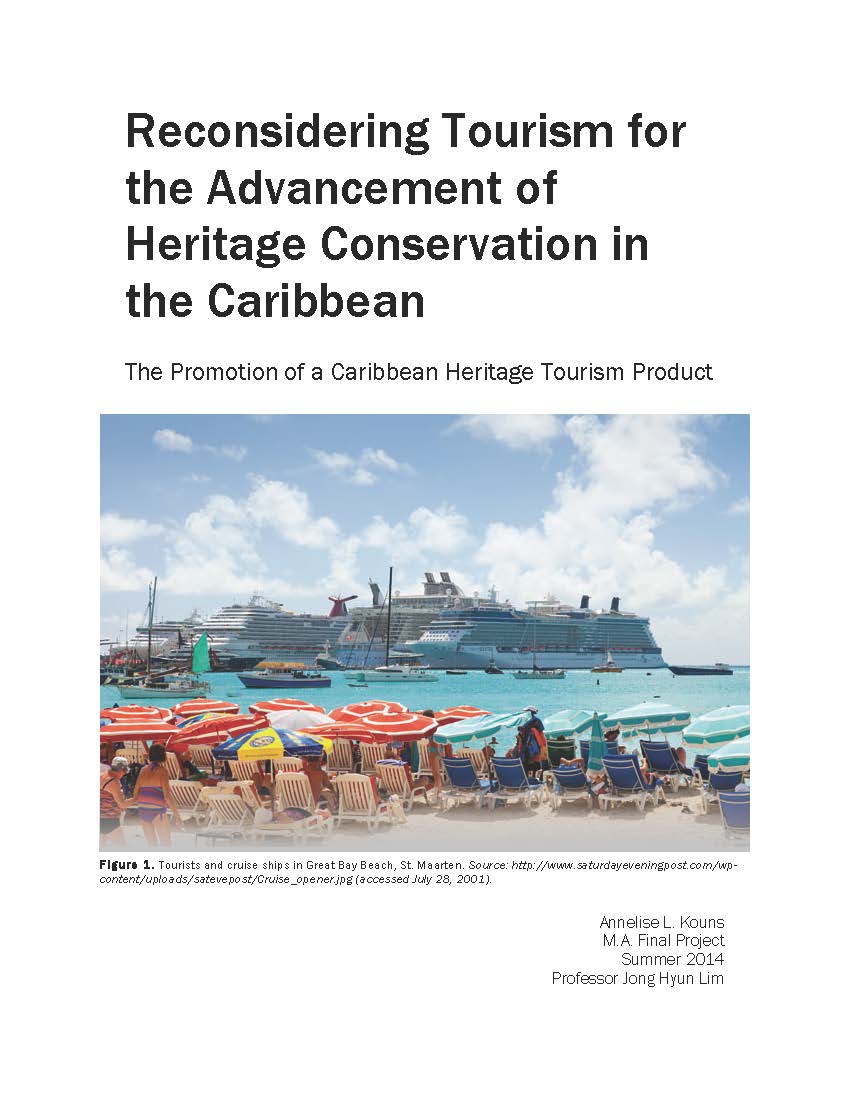
Reconsidering Tourism for the Advancement of Heritage Conservation in the Caribbean: The Promotion of a Caribbean Heritage Tourism Product


Gentrification

Revitalization is a positive and progressive practice that brings new life and vitality to rundown and depressed areas. Of the many benefits that come from revitalization efforts, increased economic activity, new employment opportunities, safer streets, and new activities and amenities are at the top. Unfortunately, as with anything there is a balancing part of this equation; these positive benefits are met with negative aspects such as higher rental rates and increased property values. Although these are considered benefits to those leading the revitalization efforts, it greatly affects local residents, businesses and property owners within the area, as they become at risk of being “priced out of the market and forced to move.”[1] This is gentrification.

Solutions to gentrification have been long proposed throughout the years, as it has been nearly unavoidable and a constant occurrence of revitalization efforts. Rent control ordinances have been implemented as a way to help local residents and owners remain in their communities by maintaining their rental rates. Rent subsidies have also been used as a solution to gentrification, covering the cost difference of the increased rental rates. Also, some developers have had to meet certain quotas of providing affordable, subsidized living options in their developments. These solutions are unfortunately not that effective in the long run, as governments just do not have the funding capacity to maintain these sorts of endeavors long-term. Also, these solutions do not solve these problems, they are just temporarily remedied and eventually the problems will resurface and chances are the problems will be worse as the solutions will no longer apply as they did initially.

In the readings this week, Lance Freeman, a professor of Urban Planning at Columbia University, reported on his findings of a study on gentrification that revealed “gentrification results in the displacement of relatively fewer lower-income occupants of an area when compared to displacement in areas that are not gentrifying.”[2] This finding is a bit perplexing, as it somewhat changes what has been typically regarded of gentrification to date. Freeman continues to say that the incentives provided through the revitalization and gentrification efforts actually reassure many of the current residents to want to stay. So are the negative aspects of gentrification improving? How are residents and owners making this transition?

To provide more insight to these questions the example of ongoing efforts to combat gentrification issues in Chinatown (NYC) is brought into investigation. Projected development to this neighborhood has caused community members to join together and become involved with all of the aspects of the planning and revitalization efforts taking place, as a way to combat a possible downfall to gentrification. The Coalition to Protect Chinatown and the Lower East Side opted to create their own rendition of a development plan, focusing less on the developer’s interests and more on those interests and desires of local residents. Three points in particular that were highlighted in their proposal were: (1) the regulation of new construction in the area, (2) protection and preservation of existing residences, and (3) protection of local, culturally diverse businesses found throughout the area.[3] One proposed solution that seemed viable from this example, was a possible incentive program called the ‘Good Landlord, Good Neighbor’ program. It basically provides affordable housing options by offering incentives to owners of small buildings that comply in renting units at below-market rates.[4] Is this long lasting? Maybe not, but it may be a good transitional option.

This example of Chinatown shows that with the right community involvement and participation from the beginning, gentrification threats can be mitigated (that is, if city officials are in compliance with citizen’s concerns and needs). Perhaps Freeman is right. Maybe the problem with past revitalization efforts is that gentrifiers have been too gung-ho to decorate and fix the place before actually settling in and getting a feel for it. Is this the end of gentrification? No. This issue is too big to simply fix overnight and no real, long-term solutions have proven successful to date, but there is hope that local residents can be more pro-active in vocalizing their interests and desires. And with that pro-active involvement, perhaps better outcomes can be discovered for all interested parties.

[1] Gunther, Justin. “Unit 9: Practicalities of Revitalization.” Class Notes, SCAD, Savannah, GA, August 20, 2014.

[2] Ibid.

[3] “Solutions to Gentrification.” Neighborhood Projects. http://macaulay.cuny.edu/eportfolios/beemanneighborhoods/solutions/ (accessed August 21, 2014).

[4] Ibid.

Expansion of the National Main Street Program

As many downtowns nationwide began to face their decline and shift into irrelevance as the suburbs began taking over, the National Trust for Historic Preservation took a concerted interest to research what was really going on behind this decline and if there was anything that could be done to save the fate of downtowns from complete absolution. They began studying and analyzing various downtowns in the Midwest to pinpoint which factors were at play, as well as to create a program which would aid in remedying this downfall to include economic rehabilitation and the preservation of invaluable historic structures.

From the study region of the Midwest, the National Trust chose three downtowns, Galesburg, Illinois, Madison, Indiana, and Hot Springs, South Dakota, that would become their pilot communities to further analyze and implement unique rehabilitation plans for each locale. Once the research was gathered, the National Trust hired program managers to implement these revitalization plans for each of the communities through grants. Once the designated time span of three years passed, the downtowns were again analyzed and it was found that all of the pilot communities had greatly benefitted from the National Trust’s efforts. New businesses had opened and “occupancy rates and property tax collections had increased.”[1] More impressively, “for each dollar which went towards implementation of the Main Street Program, an average of $11 had been invested by the private sector in rehabilitation and adaptive reuse of buildings in the pilot communities.”[2] This meant that historic and vacant buildings in towns were being brought back to life and given a new use once again.

The success of these pilot communities was reason enough to spread the success to other downtowns in an attempt to combat the plaguing damage most, if not all, downtowns were facing at the time. The National Trust started the National Main Street Center, based upon the success of the pilot communities. The original program managers became the key staff members for this new venture. With the joining of the International Downtown Executive’s Association, it was decided a state-level demonstration would be shared as the states could then pass on this knowledge with their towns and cities accordingly. States would also be able to network with other states, sharing their experiences and spreading this information even further.

Through another competition to implement this new state-level program, the National Trust chose Colorado, Georgia, Massachusetts, North Carolina, Pennsylvania and Texas. Each state was then allowed to choose 5 cities and towns to participate in the study. After implementation and analysis another three years later, the results were again successful and promising: new local organizations were developed or strengthened, commerce increased, rehabilitation efforts improved and new construction projects were taking place. The program proved itself to be successful and so it continued to spread from town to city and state-to-state. An annual conference, fittingly named the National Town Meeting, began taking place to allow for expanded reach, further training opportunities and to create a network for experienced and newly interested communities.[3]

Overall the initial efforts of the Main Street Program of the National Trust realized through the pilot communities helped them to acquire the knowledge and insight into the reasons and factors that destroyed towns as well as those that could successfully rebuild them. The key factor in the Main Street Program’s rebuilding of downtowns and cities was public-private enterprise. With the right support and coordinated interests a successful program could be realized. The successes of the pilot communities created a framework that would go on to benefit many other communities before becoming the Main Street Program that exists today, which is known as the National Main Street Center Inc.. Today, they have expanded the program in an attempt to adapt and respond to the more complexities that time has brought about to cities and towns nationwide. It is likely this program will need to constantly adjust to the growing changes our cities and towns will continue to witness as they evolve, but the initial impacts of the pilot program will never be far from the framework.

[1]Gunther, Justin. “Unit 3: The National Main Street Program.” Class Notes, SCAD, Savannah, GA, July 7, 2014.

[2] Ibid.

[3] “History of the National Main Street Center.” National Trust for Historic Preservation. http://www.preservationnation.org/main-street/about-main-street/the-center/history.html#.U8HhtqidmoU (accessed July 8, 2014).

Zoning Laws

Once zoning became adopted within city planning protocol, cities that were already in place had to adapt to these new regulations. City centers and downtowns at this tine had been thriving as they included a diverse mixture of businesses and residences. It was the fact that they incorporated different uses and functions for different citizens that made these cities and towns dynamic and central elements to their surroundings. The biggest success of cities and towns was that they catered to what their public wanted and needed. With the implementation of zoning, suddenly all of these elements that had become norms for cities and towns became prohibited.

Before too long changes started taking place and cities and towns that had once been inviting, vibrant and all-inclusive were turned into commerce districts. Zoning changed the game. It separated everything into different compartments – residential, commercial, and industrial. This separation was the first step towards the demise of city centers and downtowns nationwide as the stimulating factors were disconnected. It also brought transportation to the forefront as these new zones were situated in different areas around the urban core. These areas needed to be accessible to those working on one side of town, but living on the other side. Therefore, zoning required some sort of transportation system to be implemented, were citizens could easily reach work, commerce and goods, and their residences. Unfortunately public transportation in most areas was not a viable option. Since people were forced to rely on automobiles, there was not much holding them back from now migrating to new suburban developments. Citizens were now afforded mortgages to obtain their own private residences and with it more room and less congestion and confusion.

With everyone moving to the suburbs, the need for closer goods and services became a necessity. Now, citizens wanted similar conveniences that they once had living in or near the city, but within closer proximity to these new residential developments. All of a sudden strip malls and shopping centers started taking form near these developments. As they were still a distance from the developments, the automobile remained the primary form of transportation. The disconnection zoning initiated filtered through to these new endeavors, causing further complications and fragmentations to the new ‘ideal’ movement. As automobiles were saturating the nation, parking lots became common form that changed the previous interactions of buildings to their immediate surroundings. The focus changed from pedestrians and street-lined stores to highways or streets, parking lots and then shopping centers.

Cities and towns were left struggling to pick up the pieces as populations dwindled that further depressed local commerce and left many vacancies. Local businesses were now competing with larger chains and department stores that were beginning to take shape, such as Woolworth and Sears Roebuck that were popping up everywhere. To combat these issues, cities and towns fought to keep their commercial areas relevant. Thinking new and shiny was the path to success, many older buildings and spaces unique to these different cities and towns were unabashedly torn down and demolished to make clearance the new wave of commercial centers and their accompanying parking lots.

Pittsburgh, Pennsylvania, is a prime example of a city that went through these motions of reorganization and renewal as an attempt to clean it up. They “demolished 1,200 homes, reduced the size of the shopping district by 1 million square feet, […] swallowed more than 1,000 acres of land, razed more than 3,700 buildings, relocated more than 1,500 businesses and uprooted more than 5,000 families.” Residents wanted out of Pittsburgh and sought refuge in the new wave of residential developments taking place nationwide outside city limits. The city’s attempt to pick up the pieces only added fuel to the fire as they had already caused enough damage and remaining residents and interested organizations fought for the city to cease and desist with their renewal projects. In this case, the city of Pittsburgh lost the majority of its original character and functionality to new development that failed miserably.

Retail Practices

Retail practices were influenced by the introduction and implementation of new zoning regulations that were a complete opposite to the former downtown organization that had revolved around an effective mixture of residences and businesses. These new zoning regulations dictated that functions would now be separated and grouped into residential, commercial and industrial zones in different areas around town. This along with the rise of automobiles initiated the nationwide exodus of city dwellers to new residential developments located on the outskirts of most city limits. About this same time, larger department stores and shopping centers began opening up in closer proximity to these developments, as downtown was becoming too far and out of the way.

The vitality of downtowns began to falter, as populations declined and these newer shopping centers and larger department stores took over. Businesses were no longer able to keep up with the cheaper and more numerous competitors and many of these small and local businesses were forced to close. This created vacancies in downtowns and as many individuals were not frequenting the area, they slowly became disconnected fragments. Cities were striving to find ways in which they could compete with this new wave of retail practices, so they opted to follow lead, destroying existing buildings to erect newer and shinier buildings, in hopes it would attract more people.

An example of this can be found in the history of Clematis Street, which is the main street of downtown West Palm Beach, Florida. In the 20s, Clematis Street was a connection to the local train station with the ferry headed to Palm Beach, but as development began taking off a new bridge began shuffling traffic around Clematis. Next, all the big department stores such as Woolworth and Sears Roebuck soon moved to other parts of towns leaving Clematis irrelevant and mostly vacant. It lost its identity and sense of community. Through the years it opened more higher end stores but as malls brought more competition it did not fare that well. Until recently the area was run down and looking like a forgotten part of town. With planners taking lead of the situation, Clematis has been renewed with life and vibrancy once again, especially with the introduction of the Thursday evening event ‘Clematis by Night’ which has successfully taken off, making shops and restaurants on the street available and open after the past closing times of 5 or 6 PM, with extra entertainment (similar to a block party). It has become more central and inviting to neighboring residents once again and they seem to be encouraging this return to the experience of taking part in a downtown.