Christiansted National Historic Site, Christiansted, St. Croix, US Virgin Islands

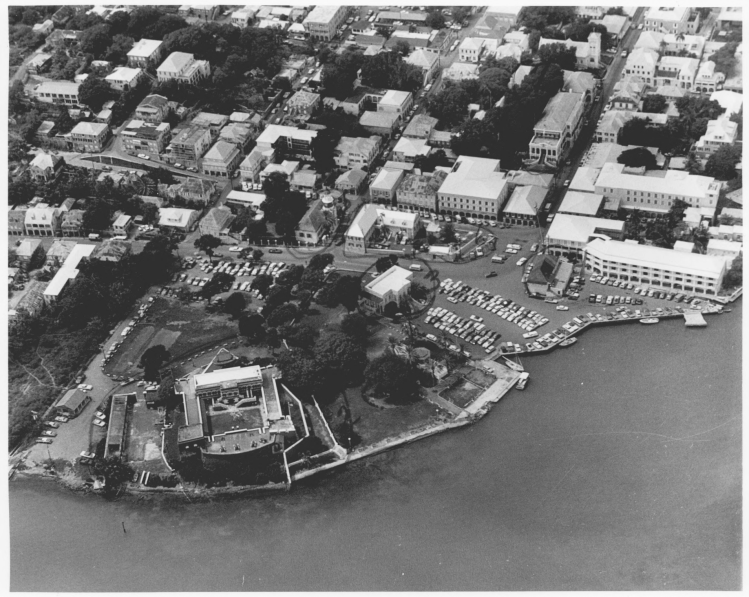
One of the earliest recorded National Register of Historic Places sites in the US Virgin Islands is that of Christiansted National Historic Site, located in none other than Christiansted, St. Croix. The site encompasses 6 historic structures on 7 acres along the waterfront. These structures being Fort Christiansvaern (b. 1738), Danish West India and Guinea Company Warehouse (b. 1750), the Steeple Building (b. 1753), Danish Customs House (b. 1734), the Scale House (b. 1856), and the Government House (1747). The buildings, together with the site, are an ever-present storyteller of the past transcending through time.
Screen Shot 2019-05-03 at 12.22.16.png

Christiansted National Historic Site Aerial View, 1976. (Photo credit: National Park Service)

Continue reading “Christiansted National Historic Site, Christiansted, St. Croix, US Virgin Islands”
Hasbrouck House, Newburgh, New York

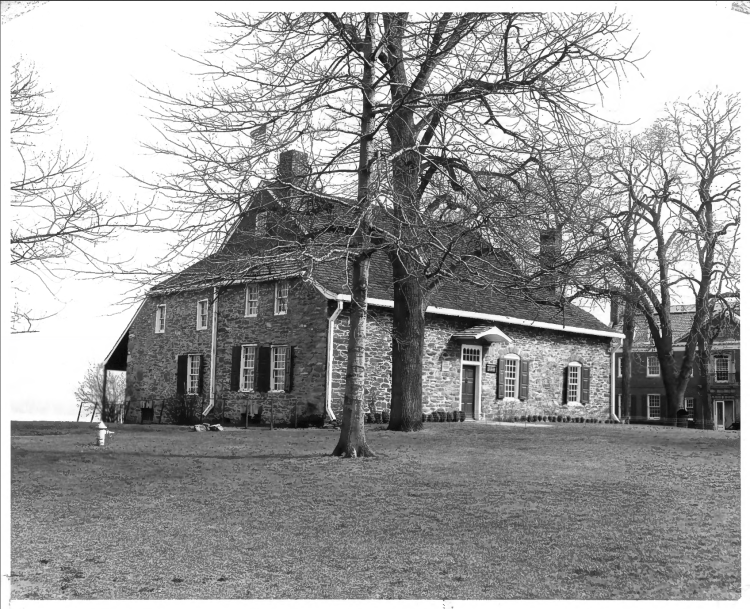
In the United States the earliest documented historic preservation efforts was that of the Hasbrouck House, or Washington’s Headquarters State Historic Site, built in 1750 and located in Newburgh, New York, overlooking the Hudson River. The Hasbrouck House became famous for being the location of George Washington’s residence while he commanded the Continental Army during the American Revolutionary War. It was here in 1850, that the site was procured by the State of New York and became the first designated historic site in the country.

Screen Shot 2019-05-02 at 10.39.11

North End and West Front Elevation (Photo credit: National Park Service, 1967)

Continue reading “Hasbrouck House, Newburgh, New York”

Preservation Month

Screen Shot 2019-05-02 at 10.00.15

May is Preservation Month and Heritage Matters will be celebrating by highlighting various historic sites around the Caribbean and US, while also taking time to discuss the importance of preservation and its early formations in those areas. Please join us all month long and do not forget to get involved in the fun where you live.

Journey out into your city or small town, or even plan a trip to visit some older, culturally, architecturally or historically significant sites to discover and learn more about the places that shaped our histories and past. If you have a chance check out the National Trust of Historic Places’ list of 31 Ways to Celebrate Preservation Month to get some great ideas of how to get more involved.

Beracha Veshalom Vegmiluth Hasidim Synagogue (St. Thomas Synagogue)

VI_97000853_Page_05

(Photo credit: Virgin Islands Historic Preservation Office)

Built in 1833, by an unknown French architect, the Beracha Veshalom Vegemiluth Hasadim Synagogue (meaning, Blessing and Peace and Acts of Piety), also known as the St. Thomas Synagogue, stands in the site of the original synagogue, which was erected in 1792. The present day building is the fourth to have been constructed, as the first was destroyed in the fire of 1804, the second was re-built and replaced, and the third destroyed in the New Year’s Eve fire of 1831. It is the second oldest synagogue in North America and boasts the longest record of uninterrupted use by a Jewish congregation, starting with just nine families. Spanish and Portuguese Sephardic Jews, most of which are shown to have migrated from Brazil, had come to the Caribbean region for European and New World trade opportunities and to escape persecution and force to change faiths to Christianity, built the Synagogue. Many of those who ended up in St. Thomas came in 1781 from the small Dutch West Indies island of St. Eustatius after brutal attacks, robbery and persecution by the British. Denmark’s control of St. Thomas allowed for greater religious freedoms and acceptance for the Jews to find refuge and by 1814 the Danish monarchy had passed a royal decree granting full citizenship rights to Jews.

Continue reading “Beracha Veshalom Vegmiluth Hasidim Synagogue (St. Thomas Synagogue)”

Mass-Produced Copies and Hyper-Developed Skeletons of Our Once Quaint Towns and Cities

I believe our cities and towns have lost a lot of their uniqueness, making it difficult to distinguish between one place and another. Every town has similar big box retailers, food chains, shopping malls, and the like, which eventually turn into vacant areas once suburban sprawl shifts into another direction. Originally every town had something that set them apart from the next town, but as modern times have developed, and with it the advancement of technology, globalization has kicked in full gear and our towns and cities have suffered, turning into mass-produced places.

Continue reading “Mass-Produced Copies and Hyper-Developed Skeletons of Our Once Quaint Towns and Cities”

What Makes the Ramsey-Donnelly Building Worth Saving?

The Ramsey-Donnelly Building was an early addition to the downtown commercial district of Mount Dora (see below) and has played an important role in town as it has been host to many of the area’s integral businesses. The building’s position on the corner of the main thoroughfares through town, both Fifth Avenue and Donnelly Street, has highlighted the building throughout the years and has made it an inviting building that successfully creates a dialogue between the building and the town.

mount-dora-street-1926-lg

(Photo credit: Mt. Dora, Fla – Nov. 2, 1926. 1926. What To Do In Mount Dora. Web. Apr.-May 2014. )

Continue reading “What Makes the Ramsey-Donnelly Building Worth Saving?”

Public Use Versus Eminent Domain

The concept of public use, while initially a great concept, has deteriorated to bureaucratic debacles. Progressive thought, especially from the 1920s has inadvertently provided governments (local, state and federal) with powers that can be manipulated for the good or the detriment of the people these laws were written to help. It is dependent upon the outlook, interpretation, and ideology of those enforcing or citing these laws. The initial concept of the laws were good, while the unseen consequences have been mixed. While trying to maintain an order and preservation of historic sites, sometimes the bigger picture is completely overlooked.

Continue reading “Public Use Versus Eminent Domain”

Stained Glass Condition Survey: United Church of Christ, Tavares, Florida

image

For this project I visited the United Church of Christ in Tavares, Florida. It is one of the oldest churches in the area, built in 1888 on donated land from the founder of the town of Tavares. The church retains all of the original stained glass which was installed the same year. I was able to talk with one of the deacons who connected me with a woman who was part of a restoration crew back in the 1980s.

Continue reading “Stained Glass Condition Survey: United Church of Christ, Tavares, Florida”

ACL Railroad Station, Mount Dora, Florida

image


The Old Mount Dora A.C.L. Railroad Station was originally constructed in 1886 in downtown Mount Dora, Florida. The town would go through about three depots. The third and final depot was built in 1915. It was a one story building, built in the Frame Vernacular architectural style. At that time in history it took about $ 8000 to complete the construction. It was built through the Atlantic Coast Line Railroad, which primarily served the South, covering distances from Alabama to Florida to Virginia.

Continue reading “ACL Railroad Station, Mount Dora, Florida”

Preservation Evaluation: Gustav Stickley’s Log House

In September 2004 the restoration of Gustav Stickley’s Log House, a National Historic Landmark located at Craftsman Farms in New Jersey, was completed. The house was originally the private residence of Stickley from 1911 to 1917. The architectural style epitomizes the Arts and Crafts movement and was meant to be ‘harmonious with its natural setting.’ [1] The house is constructed primarily of exposed chestnut log walls, with Ludowici tiles on the roof and a fieldstone foundation.

image

(Photo Credit: Ron Anthony, APT Bulletin 36, No.2/3)

Continue reading “Preservation Evaluation: Gustav Stickley’s Log House”