Survey Report: A Section of Historic Mount Dora, Florida

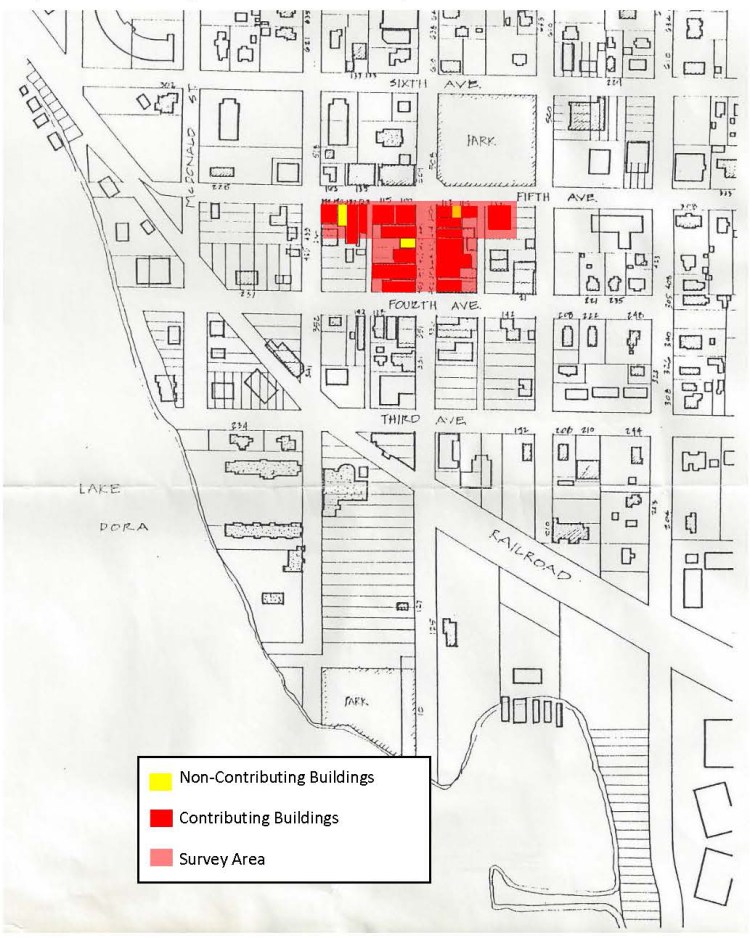
The 20 buildings which were researched and surveyed for this project are located within the downtown, historic district of Mount Dora, Florida. The majority of these buildings have a very interesting history, dating back to the early 20th century when the town was just beginning settlement. Some of these buildings have retained their historical integrity inside and out, while others have been changed and adapted for their various uses through the years; so much so that they no longer can provide a physical trace to their past. It is through their unified history that the history of the town of Mount Dora can better be understood.

This project was a very time consuming process. The investigation began around mid-October, with a simple windshield survey. This aided in the decision-making of the scope of buildings which would be surveyed. The focus was given to the oldest buildings in the area, 20 buildings to be exact, which were situated along the main, cross streets of Fifth Avenue and Donnelly Street. Once the area of significance was decided, a walk about was carried out, taking note of significant features of the buildings, such as the addresses and key architectural features. Also photographs of each building were documented.

Research commenced through the utilization of the building addresses and the local resources of the following: Mount Dora Historical Society, W.T. Bland Library Archives, Lake County Archives Department, Lake County Clerk of the Circuit Court Online Records Database, interviews with community members, and communication with building owners. I began this process by visiting the Historic Society first, thinking they would be able to best direct my search. I found some information, although limited. Next I visited the library’s archive department, where I was able to discover an older, unfinished survey project of a few of the buildings downtown. It had been completed in the late 1980s through a grant program, unfortunately after several interviews I learned a lot of the information proved inaccurate.

The Online Records Database was a great assistance to locating information about the buildings’ ownerships, parcel numbers, tax identification numbers, maps, etc. This helped to at least start a paper trail for some of the buildings, but this took days, up to weeks to locate and filter through the database. It was a very laborious process to find those parcel numbers and tax identification numbers to then research present owners, to check previous owners all the way to the first owner. It was difficult to locate every building’s record of history, as most of the town’s historical documents were destroyed in the great fire of 1922. Many of the important, historical documents were lost and there were no additional, back-up copies at that point in time. To learn more about undocumented buildings, interviews with community members were carried out, as well, calls were made to listed building owners.

The history of Mount Dora begins in the late 1800s with the first settlements of the Simpson family, particularly David Simpson and his father, M.V. Simpson in 1874, and other significant figures such as J.P. Donnelly, who became the first mayor of Mount Dora. The town was officially established around 1884. The first railroad came through town in 1887 and it provided a major boost for the town’s lagging economy. The town automatically became a favorite winter destination for northern state residents looking for some warmth and recreational activities such as boating, fishing and hunting. Another attraction for tourists was the introduction of Chautauqua in the area. A movement which formed in New York, Chautauqua was a temporary traveling entertainment that came to Mount Dora offering music and education. Around the early 1900s the railroad depot was built, which introduced a greater influx of goods and visitors. President Calvin Coolidge and his family even spent the entire month of February 1930 vacationing in Mount Dora, at one of the local hotels, Lakeside Inn (Lake Inn at that time).

The Simpson family, a rather influential family involved in Mount Dora’s growth and development, had their settlements around the majority of present-day, downtown, historic Mount Dora. They were responsible for a significant amount of the infrastructure and development of the area, including the first bank, theatre, paving of the roads, etc. Before downtown became what it is today, it was once covered with the family’s citrus groves. The Simpson family heirs continue to own many of the buildings downtown, as well they still maintain several businesses.

Development continued and Mount Dora was eventually parceled out, becoming the town it continues to remain to this day. The Historic Society of Mount Dora has worked rather hard to preserve these buildings downtown as much as possible. They are becoming more rigid in the aspects of local preservation, so as to avoid the decay or loss of the historic and cultural fabric which distinguish Mount Dora from other towns.

Out of these 20 buildings surveyed, the majority, about 85%, were of a Masonry Vernacular style. Two were in a Spanish style and another was in a Mediterranean Revival style. There is a very high level of historical integrity within the area, due to the fact that the bulk of these buildings surveyed were almost all contributing buildings. Only a couple of these buildings were non-contributing, due to the fact they were built later in time or that they had been changed drastically from their original distinguishing form.

On average the surveyed buildings were in good condition. There were a few which have either been vacant for too long or just neglected with regards to proper maintenance. For the most part, these buildings are most likely attended to properly about once a year, or so it appears. There is a need for these owners or shopkeepers to provide more attention to the upkeep of these buildings, to avoid unnecessary damage or the loss of integrity because of disregard.

I believe downtown, Historic Mount Dora would be a great candidate for the National Register of Historic Places. There is enough history within the area, if regarded as a total entity of buildings. Considering some of these building’s necessary documents were unattainable, it could pose some complications. There were a few buildings which on their own seem likely candidates for individual listings on the Register, including the Old First National Bank of Mount Dora, Simpson Hotel and Rehbaum’s Hardware (Piglet’s Pantry). The other buildings have either changed too drastically from their original state or are lacking firm, historical significance.

Buildings:

#1 Mount Dora Center for the Arts, 138 E. Fifth Avenue, Mount Dora, FL 32757

#2 116 E. Fifth Avenue, Mount Dora, FL 32757

#3 112 E. Fifth Avenue, Mount Dora, FL 32757

#4 M.V. Simpson Building, 450 E. Fifth Avenue, Mount Dora, FL 32757

#5 448-432 N. Donnelly Street

#6 Donnelly Apartments, 428 N. Donnelly Street, Mount Dora, FL 32757

#7 Old Mt. Dora Topic Building, 418 N. Donnelly Street, Mount Dora, FL 32757

#8 404 N. Donnelly Street (Oliver Twist), Mount Dora, FL 32757

#9 Piglet’s Pantry (Rehbaum’s Hardware), 402 N. Donnelly Street, Mount Dora, FL 32757

#10 The Drawer (Crane’s Furniture Store), 403 N. Donnelly Street, Mount Dora, FL 32757

#11 The Mount Dora Hotel (Renaissance Building), 411-413 N. Donnelly Street, Mount Dora, FL 32757

#12 427 N. Donnelly Street, Mount Dora, FL 32757

#13 431 N. Donnelly Street, Mount Dora, FL 32757

#14 Simpson Bed & Breakfast, 441 N. Donnelly Street, Mount Dora, FL 32757

#15 Old First National Bank Building, 100 W. Fifth Avenue, Mount Dora, FL 32757

#16 Simpson Hotel, 110 W. Fifth Avenue, Mount Dora, FL 32757

#17 120 W. Fifth Avenue, Mount Dora, FL 32757

#18 The Princess Theatre, 130 W. Fifth Avenue, Mount Dora, FL 32757

#19 140 W. Fifth Avenue, Mount Dora, FL 32757

#20 Atkins Realty, 196 W. Fifth Avenue, Mount Dora, FL 32757

References:

Barr, Melanie, Historic Resource Survey: Downtown Mount Dora, Florida, 1987.

Bland and Associates Inc., NHRP Documentation of Historic Resources in Mount Dora, 2009.

City of Mount Dora Historic Preservation Board, City of Mount Dora: Historic Design Guidelines Florida
Department of State: 2001).

Dworken, Steven (Realtor at Real Living Good Neighbor Realty), interview by author, 30 October 2013.

F.C. & P. Special Rates,” The Ocala Evening Star, 16 March 1900, Img. 3.

Glimpses of Mt. Dora: The Land of Sunshine and Flowers. (Mount Dora, FL: Lewis Printer).

Grantham, Shirley (Assistant VP, The First National Bank of Mount Dora), interview by author, Mount
Dora, Florida, 29 October 2013.

Green, Carolyn (Mount Dora Historical Society), interview by author, Mount Dora, Florida, 29 October
2013.

“History of Mount Dora,” Florida Back Roads Travel (Mike Miller), accessed 01 October 2013,
http://www.florida-backroads-travel.com/history-of-mount-dora.html.

Lake County Archives Department

Longstreet, Cornelius H., Cornelius Longstreet Diaries, 1886, 1894, 1897, 1898, 1899 (Mount Dora,
Florida: 1886, 1894, 1897, 1898, 1899).

“Mount Dora Historical Trail,” Steve Rajtar, accessed 28 September 2013,
http://www.reocities.com/krdvrg/hikeplans/mount_dora/planmountdora.html.

“Mount Dora Historical Buildings,” Bob Leonard, accessed 15 October 2013, http://www.bob-leonardflorida.
com/floridanabob/mount_dora_historical_buildings.htm.

Mt. Dora, Fla., Lakes and Hills. (Jacksonville, Fla.: Arnold Printing Company, 1919).

“Official Records Search,” Lake County Clerk of the Circuit Court, accessed 31 October 2013,
http://officialrecords.lakecountyclerk.org/acclaimweb/search?target=_blank.

Ormund Powers, “Mount Dora Owes Simpson Family Nod As Founders,” Orlando Sentinel, 28 September
2013, http://articles.orlandosentinel.com/1999-04-14/news/9904130878_1_downtown-mount-doralongstreet-
james-simpson.

Simpson, Robert (grandson of James Simpson and great-grandson of M.V. Simpson), interview by
author, Mount Dora, Florida, 04 November 2013.

Sanborn Map Company, Mt. Dora, Lake County, Florida, 1920.

U.S. Department of Agriculture, Aerial photographs of Lake County, 1941, 1947, 1953, 1958, 1966.

Woman’s Christian Temperance Union (W.T.C.U.), “Temperance Column,” The News-Herald, 09 October
1890, Pg. 2, Img. 2.

W.T. Bland Library Archives
Mount Dora Trust & Bank Co., Mount Dora, Florida

Summary Paragraph
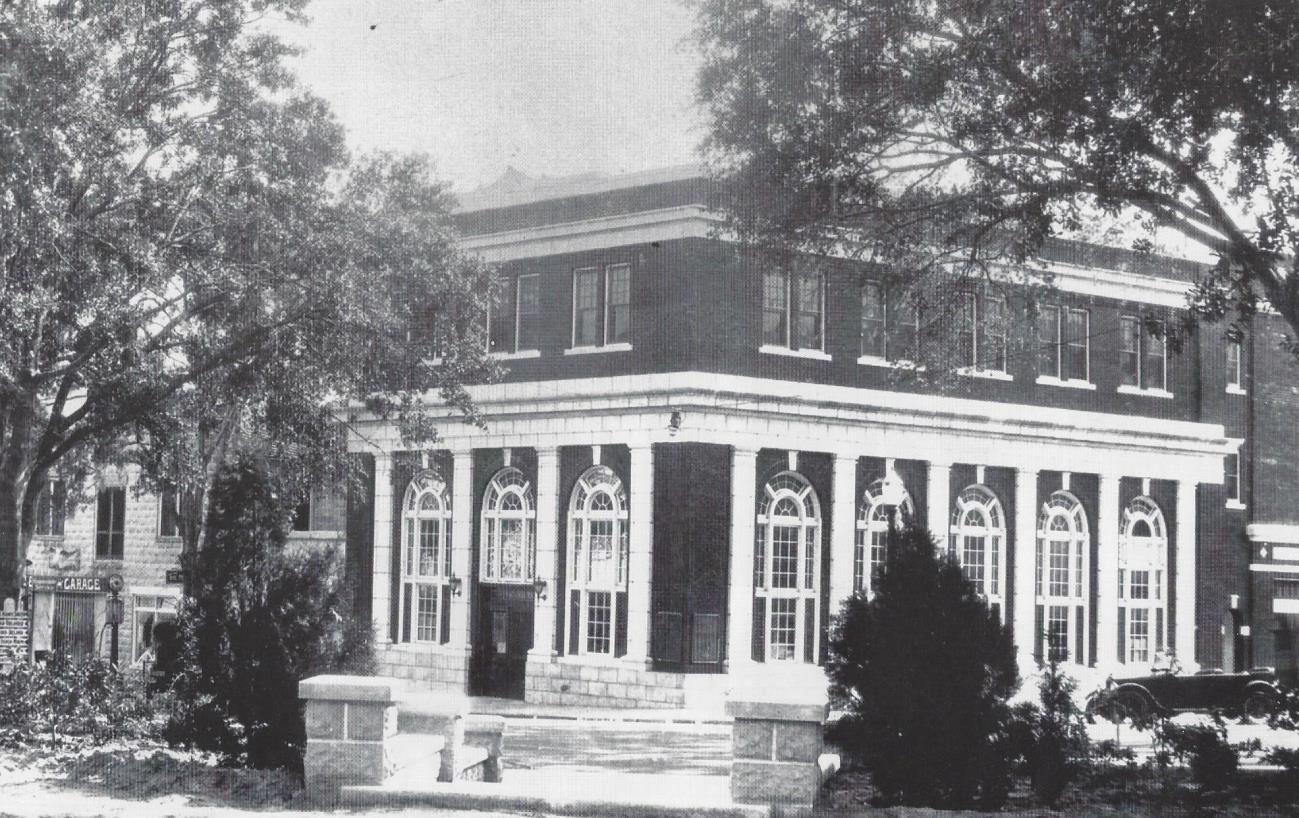
The Mount Dora Bank & Trust Co. is an early 20th century bank building situated on the southeast corner to the entrance of the historic downtown and commercial district of Mount Dora, Florida. The building is located on the main corner of Donnelly Street (east façade) and Fifth Avenue (which is the main entrance on the north façade). It is a 3 story, Masonry Vernacular style building with an irregular rectangular plan. The exterior walls are constructed of running brick which has been painted a creamy yellow color and the foundation is built of concrete and concrete block, which has been finished with beaded mortared joints. There are white decorative, paneled pilasters with an entablature and cornice flanking both the east and north of the building. The building is in good condition and other than the change of color and relocation of the main entrance, has retained the majority of its exterior integrity.

Narrative Description
The former Mount Dora Bank & Trust Co. is located on the main thoroughfare corner of Donnelly Street and Fifth Avenue. The building was constructed in a Masonry Vernacular style with a continuous, concrete block foundation. The exterior walls were constructed of hollow clay tile and running brick in their original reddish fired color. The plan was that of an irregular rectangle with the main entrance facing east to Donnelly Street. On the eastern exterior entrance were three bays filled with wooden Palladian double height windows, the center bay hosted the main entrance glass, double doors, while the north façade, facing Fifth Avenue, had five bays filled with the same wooden Palladian double height windows. Between the bays were white decorative, concrete paneled pilasters with an entablature and cornice flanking both the east and north facades of the building. On the third story there were two wooden double-hung windows atop each of the double height Palladian windows, accounting to six on the east façade and ten on the north façade. A secondary cornice was located just above the third story windows on both the east and north façades. The roof was flat with a simple incline to extract water from the rainfall and it had a built up pediment.

Plaques bearing the bank’s name were predominantly displayed on both sides of the building on the corner of the thoroughfare of Donnelly Street and Fifth Avenue. The main entrance, glass double door was lined with two exterior sconce lights, one on either side. Within the interior of the building was a marble tiled flooring and marble wainscoting. The ground floor was a double height space of about 22 feet. Teller windows on the ground floor, spanned from the east to west ends of the building. They had marble countertops with brass and bronze cages which separated the tellers from the public. To the rear of the main floor lobby, which was the west end of the main floor, there was a state of the art safe with a circular door. The safe was from the New York Safe and Lock Co. and housed about 300 safety deposit boxes and featured hexagonal tiled flooring.

The double height space of the open plan of the ground floor was further enhanced by the decorative ceiling which spanned the entire building. The ceiling featured a coffered design with elaborate crown molding. A staircase in the rear led to a partial second floor mezzanine which extended from the south wall out about 20 feet. It contained an equipment room and a smaller safe. A third floor was also added; this was where the bank’s officers had their offices and a meeting space within a boardroom. The walls of these rooms were wood-paneled in mahogany. The light fixtures were of an elaborate nature and were incorporated for every light. There were three bathrooms in the entire building, with one located on each floor. The two on the ground and second floors were half-bathrooms, while the one on the third floor was a full executive bathroom featuring a shower.[1]

The bank witnessed the further development of the town of Mount Dora, without much change or affect to the institution or the building. First National Bank of Mount Dora ultimately moved locations, moving further north on Donnelly to 714 North Donnelly Street around 1965.[2] Around the same time E. E. Husky, a local realtor, purchased the building from Simpson. It was transformed it into a realty office and Husky simultaneously made a few alterations. The exterior brick walls were painted green and awnings were added to the third story windows on both the east and north façades. The main entrance was moved from the east façade to the north façade, facing Fifth Avenue. The doorway of the east façade was replaced with a wooden Palladian double height windows, made to match the existing, surrounding windows and the new glass double doorway was situated on the north façade, in the third, middle bay. The safe on the ground floor was removed from the building. The main open plan of the ground floor changed as the tellers and marble countertops were removed, retaining the original marble flooring and wainscoting. The second floor mezzanine and third floor executive offices were used and maintained, including the secondary safe on the second. All of the decorative light fixtures were removed.

In 1991 the building would again change ownership. Keith Shamrock, another local realtor, bought the building from Husky to house his realty office. Once more the building would see minor alterations. All of the exterior awnings were removed, with the exception of the one hovering over the main entrance. The brick walls were painted a creamy yellow color. The name of the building changed to that of the Shamrock Building and the new name was added to both the east and north façades of the building on the brick banding, just below the dentil. Partitions and cubicles were added to the ground floor, in an effort to create segmented office spaces within the open plan. The building has since been rented to the Real Living Good Neighbor Realty, although the building remains owned by Shamrock.

Hurricanes and tropical storms through the years have caused significant damage to the building, especially the 2008 Tropical Storm Fay, which completely destroyed the third floor and second floor mezzanine. Water damage was substantial, damaging the wood paneling and carpeting of the offices located on the third floor. The influx of excess water leaked to the second floor mezzanine and the ground floor causing further damage. To date, the damage is still visible. From the ground floor, patches and water damage on the walls are noticeable. The third floor’s wood paneled walls are still in disrepair and a musty smell continues to permeate the second and third floors.[3]

Despite this damage, the building is in good condition and other than the change of color and relocation of the main entrance, it has retained the majority of its exterior integrity with regards to its location, design, setting, materiality, feeling and association. Although the interior has been altered with the removal of the key bank elements of the tellers, marble countertops and the safe, the marble tiled flooring and wainscoting remain and are in very good condition, regardless of the extensive water damage. Granting it has been the Shamrock building since 1991, this building’s grand design continues to be a reminder of the past and the early days of Mount Dora.

Statement of Significance Summary Paragraph
The Mount Dora Bank & Trust Co., built in 1925, was one of many buildings in town built, owned and operated by James W. Simpson. Simpson was a very influential community member who founded the majority of what makes up the infrastructure of present day Mount Dora. His father, David Simpson, and grandfather, M.V. Simpson, were the first settlers of Mount Dora in 1874.[4] David Simpson was the first to set root in Mount Dora, homesteading 160 acres facing Lake Dora, which is the current historic downtown of Mount Dora. His grandfather, M.V. Simpson, homesteaded another 160 acres in a tract adjoining his son.[5] When James came of age he followed in these footsteps, continuing to make positive, impactful changes to benefit Mount Dora. Through the Mount Dora Bank & Trust Co., he founded the first financial institute of Mount Dora and the surrounding area, which would be housed in this building once construction was completed in 1926. The building meets National Register Criterion A, in the significance of an Event as it was the first bank in the area, and Criterion B, as the builder and owner of the building was a significant, leading founder of the community’s infrastructure.

Narrative Statement of Significance
The property, which was located on the main thoroughfare corner of Donnelly Street and Fifth Avenue, was bought by James M. Simpson from the Whitney family in 1925. The previous structure owned by the Whitney family had been destroyed due to a devastating fire in 1922, which also destroyed quite a majority of the downtown area of Mount Dora. The original bank, Bank of Mount Dora, of which Simpson was the founder and president, was located at 404 Donnelly Avenue (Mount Dora), just 4 buildings south on the opposite side of the street.

Simpson had been responsible for much of the infrastructural development within Mount Dora. He was a descendent of the first settlers of Mount Dora, through his father, David Simpson, and grandfather, M.V. Simpson, who homesteaded in the current historic district of Mount Dora in 1874.[6] Between his father and grandfather they owned 320 acres of land, most of which was orange groves. James Simpson followed in their footsteps and was a very successful citrus farmer. He was also a very influential community member and took great strides to develop Mount Dora.

He organized the Mount Dora Citrus Growers Co-Op and managed the group until 1933. He owned a local grove maintenance business, servicing the local farmers and groves. He built a Citrus Packing Plant, which would later become a successful Ice House and later a World War II Youth Center. He founded Mount Dora’s first dairy in 1918. He was responsible for the fundraising efforts and realization of the first school in Mount Dora, Educational Hall. Simpson was also behind the petitioning for the founding of Christian Home and Bible School. Also most importantly, he was responsible for the paving of Mount Dora’s first roads.[7]

His family was responsible for significant development within Mount Dora around the same time that Simpson was buying the property at the corner of Fifth Avenue and Donnelly Street. His father had just built the Princess Theatre in 1923, also on Fifth Avenue, just 2 buildings west of the property. While at the same time, his brother, Howard Simpson, was constructing the Simpson Building (eventually the Simpson Hotel), on Fifth Avenue, adjacent to the property.[8]

Simpson’s motivation for purchasing the property was to construct a larger bank, as the current bank’s space was not large enough to accommodate the growing financial needs of the town; for this endeavor he commissioned the architect Gamble Rodgers of Winter Park, Florida; the same architect his brother Howard Simpson had commissioned to build the Simpson Building. At this time and in this area, the commissioning of an architect was an expensive feat and very few were consulted or sought out. Construction began in July 1925 and was not completed until March 1926.[9] While waiting for the construction to finalize and still at the previous location, the bank established its charter and on September 12, 1925, re-opened its doors to the public as the state bank of Mount Dora Bank & Trust Co.[10]

On July 6, 1927, the bank received the charter to become a national bank, again changing its name to the First National Bank of Mount Dora. George White, Sr., from the Federal Reserve Bank in Jacksonville, Florida, relocated to Mount Dora to serve as vice-president, eventually becoming president and CEO after Simpson’s inevitable resignation. The bank survived the Great Depression, maintaining financial stability within Mount Dora and the surrounding area.

The bank witnessed the further development of the town of Mount Dora, without much change or affect to the institution or the building. First National Bank of Mount Dora ultimately moved locations, moving further north on Donnelly to 714 North Donnelly Street around 1965.[11] Around the same time E. E. Husky, a local realtor, purchased the building from Simpson. It was transformed it into a realty office and Husky simultaneously made a few alterations.

In 1991 the building would again change ownership. Keith Shamrock, another local realtor, bought the building from Husky to house his realty office. Once more the building would see minor alterations. The building has since been rented to the Real Living Good Neighbor Realty, although the building remains owned by Shamrock.

Stained Glass Condition Survey: United Church of Christ, Tavares, Florida

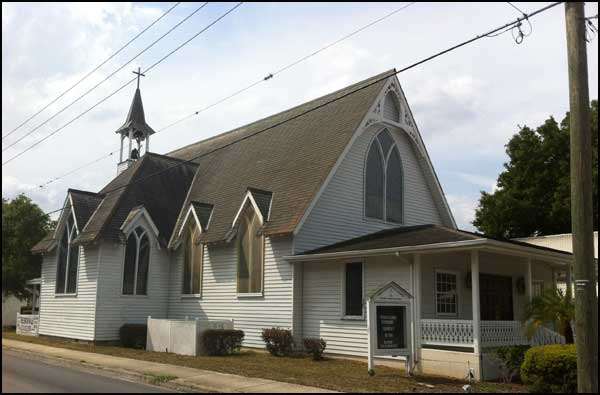
For this project I visited the United Church of Christ in Tavares, Florida. It is one of the oldest churches in the area, built in 1888 on donated land from the founder of the town of Tavares. The church retains all of the original stained glass which was installed the same year. I was able to talk with one of the deacons who connected me with a woman who was part of a restoration crew back in the 1980s.

The stained glass throughout the church is in remarkably great shape. I learned that the glass has not been touched, other than the addition of the protective screens which were attached to the exterior frames to guard from excess damage. There is no indication of manufacturer nor the date of manufacture, although I was informed that the history records indicate the stained glass is original and was installed in 1888, during the construction of the church. No other records are around which could help in determining the manufacturer nor the date of manufacture.

The came which joins the glass pieces together is in excellent condition. On the glass which I focused my investigations, I noticed there were two horizontal bands of raised came, perhaps a supporting element to secure the glass. The glass is in great condition, no noticeable cracks or chips. The bubbling is noticeable in the glass as is a protective glazing pane as you look through the glass (through the blue and yellow glasses). I was informed it is the original glass from 1888, no alterations nor reproductions have been introduced. When I inquired about a maintenance plan I was stunned to learn there is no plan in order. There was an interior restoration completed back in the 1980s, focusing on the interior flooring and seating.

There were later additions in the 1990s of a rear rectangular entry with a covered porch, and stained glass was added to the space to fit in with its surroundings, although it is a different style completely and the windows are square and not similar to the long arched windows. Considering there is no maintenance plan in order is very amazing to me, especially as it is the original glass and the fact that lately there has been excessive construction on the main road flanking the left side of the church. The deacon informed me the church is quite worried the increase of vibrations from the construction work may begin to have negative impacts on the strength and integrity of the stained glass. I urged him to implement a proper maintenance plan to ensure the longevity of the glass and the building’s wooden structure.

Public Use Versus Eminent Domain

The concept of public use, while initially a great concept, has deteriorated to bureaucratic debacles. Progressive thought, especially from the 1920s has inadvertently provided governments (local, state and federal) with powers that can be manipulated for the good or the detriment of the people these laws were written to help. It is dependent upon the outlook, interpretation, and ideology of those enforcing or citing these laws. The initial concept of the laws were good, while the unseen consequences have been mixed. While trying to maintain an order and preservation of historic sites, sometimes the bigger picture is completely overlooked.

The concept of eminent domain has been abused by politicians and developers alike. The designation of certain properties and sites as historic resources has also come into question due to the underlying ideology and motive of those involved in fighting for or against such designations. What constitutes a historic designation? Does the fact that the building is over a certain age deem it historic alone? Should there not be some significant event tied to the property or the site if it 50 years or older before it can be deemed appropriate?

The federal government was forced to step in and set up standards to preserve certain areas, sites and buildings to keep them from being destroyed. They also helped organize funding to aid in defraying expenses incurred in restoring and preserving these historic monuments. This was done through standards set forth and encouraged to be adopted by state and local governments to preserve these sites. Most individuals were not able financially to preserve or rehabilitate historic site, nor did they have the knowledge of what they had to do and avoid. Through the laws of 1906 through present day, the federal government has been able to help state and municipal governments understand and direct restoration, preservation and conservation of these various sites.

While some states were ahead of the federal government, in their pursuit to maintain historic sites, most were not and had to be guided by standards to which everyone could adhere. Tax laws have been implemented to encourage preservation initiatives, which has helped many individuals wanting to preserve the past.

The concept of public use has changed drastically through its inception to present day. In many instances this has been for the good, but as with a blanket coverage, instances can be cited to show this can be abusive, as was the case of Kelo versus the City of New London (Connecticut). It was ruled appropriate for the government to use eminent domain to seize land from a private owner for the sale to a private developer, as the government claimed this would increase the tax base of the town. The proof in this particular instance has not yet born out and a family’s property was inappropriately seized – not for the sake of the community, but for the sake of the developer.

Other instances have arisen, such as St. Bartholomew’s Church in New York City, whose congregation applied to construct a high-rise office tower on property they owned, in order to provide an income to handle expenses of the church. The ruling of the New York City Landmark’s Preservation Commission was to deny such a building permit because of its inappropriate scale. The church, designated a historic landmark in 1967, wanted to build a 57 story office complex with a reflective glass façade to provide an income that would fund various church projects including the restoration and maintenance of the church. While it is agreed that this 57 story building would be inappropriate for such a site, there was no alternative offered by either side. The public use concept was appropriately incorporated in the denial of this permit.

The concept of public use has changed greatly throughout the years and though there have been some major hiccups along the way, for the most part the laws and organizations formed have helped historic preservation move forward. There is no absolute ruling with regards to preservation, it is a case by case situation, and every case must be explored and reviewed before any headway is given. The good thing about having previous cases, laws and ruled of enforcement is that we can learn and draw from them as preservation advances and learn how to work with them or challenge them when necessary.

Restoration of the Norwich Cathedral

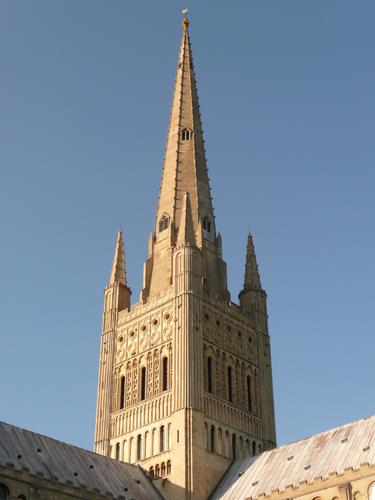
Norwich Cathedral, located in Norwich, Norfolk, England, was constructed between 1080 and 1120 in the Norman Romanesque style. It was built using flint and mortar, then it was covered in limestone. In 1463, the spire of the cathedral was hit by lightning, causing a fire and damaging the building. The Bishop at the time ordered a construction of a new spire, which was constructed of brick faced with stone, supported on brick squinches that were built into the tower. B.M. Feilden, the conservator architect for this restoration was commissioned to work on the Cathedral. Through visual analysis of the structure, he was able to establish: that the spire had cracked vertically on every side (8 sides in total), external stone was decayed and bulging and the internal brickwork was horribly decayed in several places. It was also discovered that a major crack had established between the stone and the brick core, likely caused by wind vibration.

Feilden’s approach for restoration was based on his belief that since the spire had managed to survive 500 years, post completion by John Everard in 1466, then there was no reason why it could not be restored to its original strength to withstand at least another 100 years. His proposal was to grout the voids existing between the stone casing and brick core, then introduce the insertion of ties across the brick’s vertical cracks with occasional ring beams. Due to the weak condition of the spire, Feilden opted not to add extra weight to the existing wind loading, therefore the scaffolding would need to be an independent element. He designed a “central octagonal ring with spring loaded ties to 8 external channels at the angles to restrain the spire at its weakest point.” [1]

It took 2 years through very harsh winters to complete the project. The first step taken was to fuse the interior junction of stone and brick through the use of grout. After that the ties were cut in and the masons hired to complete the brickwork began to cut out the defected bricks in 18-inch vertical strips. From the beginning, Feilden had warned the masons to only work at 3 places at once, which they ended up ignoring, causing severe damage to the already weak spire. It was discovered that the spire had moved while the masons were working on the brick, due to the fact that they opted to work at 9 different places at once instead of the recommended 3. Upon further investigation it was made apparent that there had been displacement along with the start of a crack around the circumference. The brick openings were immediately filled.

After completion of this restoration, a maintenance plan was formed and put into action. Every 5 years inspections would be carried out and every year the bays would be cleaned. After the cleaning, any damages discovered would be examined, with greater attention placed on the horizontal weatherings and pointing. Feilden claimed a proper maintenance program would be far more beneficial in the philosophy of repair versus restore. He also created a sliding scale of which to compare with visual analysis during maintenance checks; Immediate, Urgent, Necessary, Desirable, Monitor (with Immediate needing the quickest attention). Feilden believed using the same crew for maintenance every year would help diminish unnecessary problems from taking place.

[1]

Feilden,B.M., “From Restoration to Maintenance: A Case Study of Norwich Cathedral,” APT Bulletin Vol. 21, No. 3/4 (1989): 25.

ACL Railroad Station, Mount Dora, Florida

The Old Mount Dora A.C.L. Railroad Station was originally constructed in 1886 in downtown Mount Dora, Florida. The town would go through about three depots. The third and final depot was built in 1915. It was a one story building, built in the Frame Vernacular architectural style. At that time in history it took about $ 8000 to complete the construction. It was built through the Atlantic Coast Line Railroad, which primarily served the South, covering distances from Alabama to Florida to Virginia.

The last passenger train to pass through Mount Dora made it’s last strip in 1950, while freight was still running until 1973. From 1973, this third depot has been adapted to house the local Chamber of Commerce for Mount Dora. It was added to the National Registry in 1992, with historic significance listed as an event. That event was the fact that it was the third and last depot built in Mount Dora and that in 1950, it was the last time an Atlantic Coast Railroad passenger train would run on the this line. The area of significance and the historic function are both denoted as transportation, as it was based on the railroad. [1]

It is now a privately owned building, functioning as the Chamber of Commerce, where information pertaining to the town as well as the historic background of the station can be found.

[1]

“Florida Lake County,” National Register of Historic Places, accessed 19 October 2013, http://www.nationalregisterofhistoricplaces.com/FL/Lake/state.html, Old Mount Dora A.C.L. Railroad Station.

Preservation Evaluation: Gustav Stickley's Log House

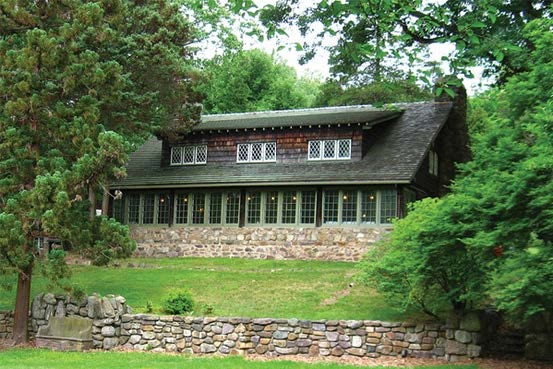
In September 2004 the restoration of Gustav Stickley’s Log House, a National Historic Landmark located at Craftsman Farms in New Jersey, was completed. The house was originally the private residence of Stickley from 1911 to 1917. The architectural style epitomizes the Arts and Crafts movement and was meant to be ‘harmonious with its natural setting.’ [1] The house is constructed primarily of exposed chestnut log walls, with Ludowici tiles on the roof and a fieldstone foundation.

The third phase of restoration began in 2001, when the deterioration of the logs became quite notice1able. To ensure the structural integrity of the logs, the preservation team needed to examine the building. Resistance drilling was chosen as the least destructive means of investigation; meaning a ⅛” to ¼” drill bit would be drilled into the logs while the resistance would be recorded. For this project, the IMLRESI (manufactured by IML GmbH of Germany) system, of resistance drilling was used to record the data to show ‘the internal voids and intermediate stages of decay.’

From the beginning the team wanted to ensure the preservation of the logs would retain the structural integrity of the house. An architect, material conservator and structural engineer investigated the house, looking for any material deterioration, significant movements, discolorations, growths, etc. Load distributions and performance were analyzed, which found the presence of overstressed elements. There proved to be deterioration of the logs on each of the exterior elevations, due to rot and termites. Because the house was primarily wood, the team feared the damage could be more extensive and expansive. They discovered further rot damage from the rafters to the porch’s ceiling joists to a post on the north corner of the west elevation.

They wanted to make sure they could locate and quantify the extent of the total deterioration. The team opted to perform a visual examination of the lower courses of the exterior logs, joists and all the exterior openings, while probing the logs to measure the moisture content. Since majority of the wood rot occurs from the center out, exterior damage is not as evident, but they hoped the probing during examination would allow for instant detection of any voids. The moisture content of the logs ranged from 8%19% but it was noted that this had been measured in the midst of a several month long drought, meaning the readings may not have been typical. Because so much damage had been discovered, the team realized these readings were not truly indicative of the extent of moisture and active decay. They opted to perform another round of resistance drilling on these lower courses of logs, color coding their findings based on the severity of the damage. Majority of the logs at the base, those adjacent to the window sills and the overhanging logs at the wall corners were all requiring repair. Wood epoxy was used to repair some of the concealed areas, but for the exterior repair, the the damaged logs needed to be carefully removed and replaced with salvaged chestnut logs.

The process of removing and replacing the logs was quite a challenge for the team, as the house’s remaining structure of the logs required further support, so the deteriorating logs could be cut and removed. The team worked together with a contractor’s engineer and were able to find a plan to replace all the logs at the base. During the remedying of the porch, it was discovered that half the ceiling joists had wood removed to host space for exterior lights; this had compromised the strength of the log beams causing them to become overstressed. They opted not to replace them, as the cutouts would still be necessary. Instead the team considered it better to reinforce the existing logs. They had the choice of using carbon-fiber composites or steel plate insertions, which they ended up using the latter. To do this, the second floor was shored, so that the logs could be temporarily removed. The logs were treated like a sleeve, so as to conceal the steel plates within, which were shaped to align with the ceiling contours. For the repair of the corner post, it was decided to introduce new stainless-steel elements as the damage of the wood post was so extensive. It was attached to both the new and original wood logs.

In my opinion, the use of resistance drilling made it possible to efficiently solve and remedy the deterioration of the logs. In the process of remedying the damaged wood, all effort was made to preserve as much of the existing logs as possible. The repairs which required replacements and the use of epoxy seemed necessary and it came across that the team had carefully debated these choices before implementation. However, I do not necessarily agree that a completely different material should have been introduced for the corner post. If the previous wood post was so far damaged, I believe they should have replaced it with a salvaged piece of log, just as the logs for the walls had been replaced. It seems that through the introduction of a stainless-steel post that some of the integrity of the house was changed.

[1]

Radcliffe Trenner, Anthony and Meade, “Wood Assessment and Repair of Gustav Stickley’s Log House at Craftsman Farms, New Jersey.” APT Bulletin 36, No.2/3 (2005): 2936

Condition Survey: Simpson Building, Mount Dora, Florida

The Simpson Building is a historic, brick building located in downtown Mount Dora, Florida. Built in 1925 it originally served as a hotel; current day the four storefront spaces on the main level are rented to four different business owners, with each store operating a separate HVAC system. From the exterior, the building appears to have various moisture problems which can be observed through: salt deposits, mold and mildew, rust and stains, cracked window frame, and cracked and missing bricks. The best ways to prevent these moisture problems would be to: clean the exterior walls regularly, investigate the water runoff system and/or instill a properly functioning system, make sure all the window and door frames are repaired and in good condition, and insure that HVAC systems are in proper working condition.