Did you ever wonder how far stretching the Prairie School architectural movement had reached? How about walking the streets of Humacao in Puerto Rico and catching a glimpse of something that looked straight out of Frank Lloyd Wright’s portfolio? Enter, the Casa Roig Museum. Built in 1920 by notable Czech architect Antonin Nechodoma, Casa Roig was originally designed as a residence for the prominent Roig family in Humacao, in the Prairie School style. It is an outstanding example of the architectural style and is undeniably influenced by Frank Lloyd Wright.
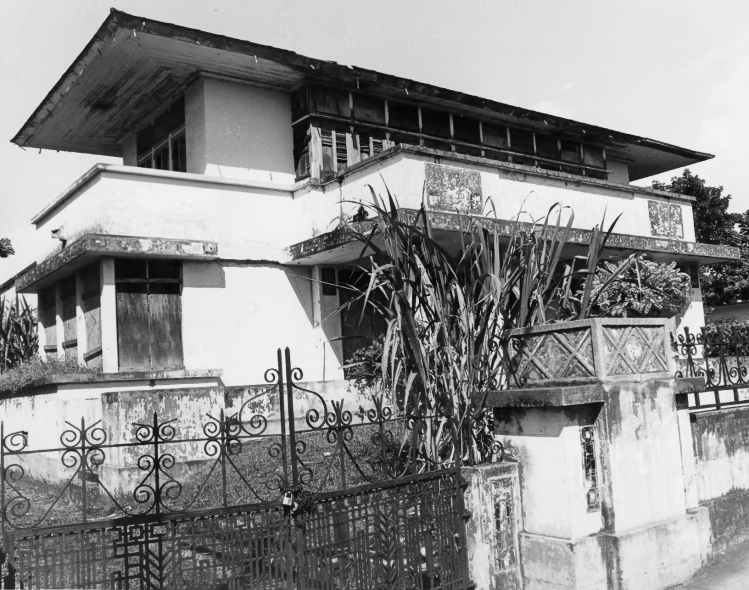
Casa Riog before restoration and preservation work commenced, 1977. (Photo credit: National Park Service)
Architect Antonin Nechodoma had migrated with his family from the Czech Republic to Chicago in the late 1880s where he worked as a contractor. By the early 1900s he had relocated to Puerto Rico and went on to become a very famous architect in the Caribbean region. His residences were almost always in the Prairie School style, while his more public and religious building designs were more varied; however, Casa Roig remains one of Nechodoma’s best intact residences to date.
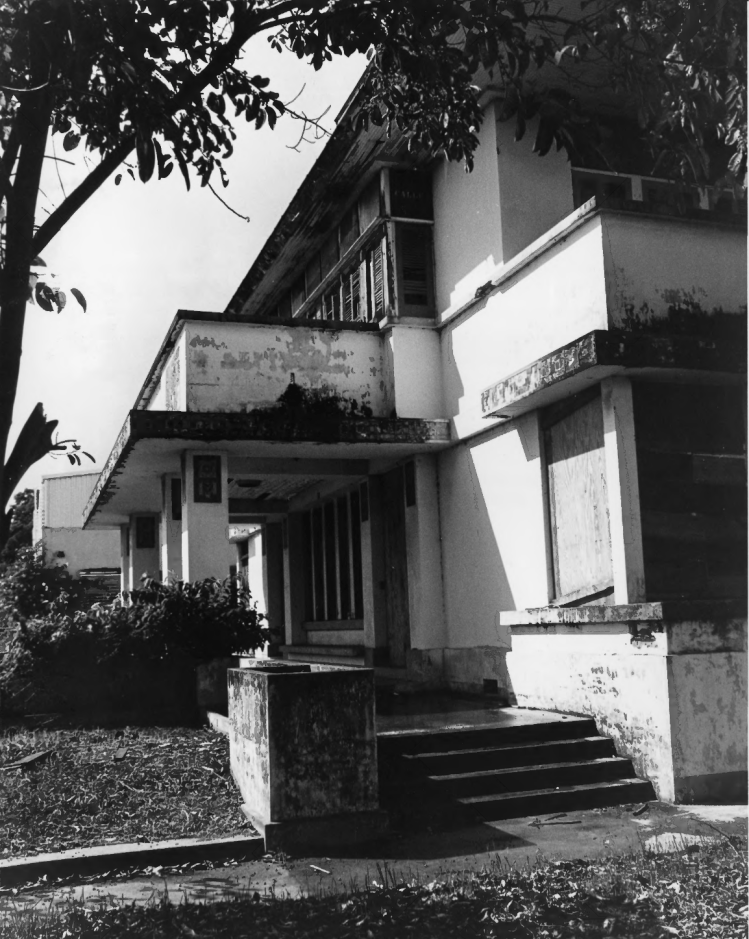
Entrance through the covered portico, 1977. (Photo credit: National Park Service)
The house, later turned museum is a two-story concrete and wood construction. The Prairie School idea of horizontality is emphasized throughout, not just in the design of the layout, but in the window openings, the exterior access, as well as through the use of ornamental mosaics, which decorate the architectural features such as cornices, columns, exterior terrace walls and the gate.
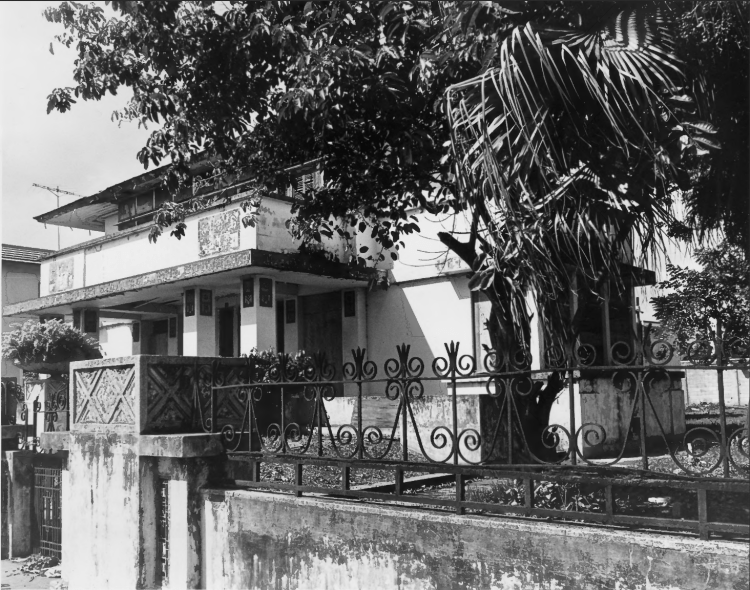
View from the street, 1977. (Photo credit: National Park Service)
It was inhabited by the Roig family until the late 1950s and then sat empty for nearly 20 years, falling into disrepair. In 1977 the family gifted the residence to the University of Puerto Rico, who took on the arduous responsibility of preservation and restoration. After nearly 10 years of hard work, the residence was turned into a museum and remains a testament to the Caribbean adapted Prairie School style.
The residence was added to the National Register of Historic Places in 1977.
Discover more from Heritage Matters
Subscribe to get the latest posts sent to your email.
 Heritage Matters