
(Photo credit: Virgin Islands Historic Preservation Office)
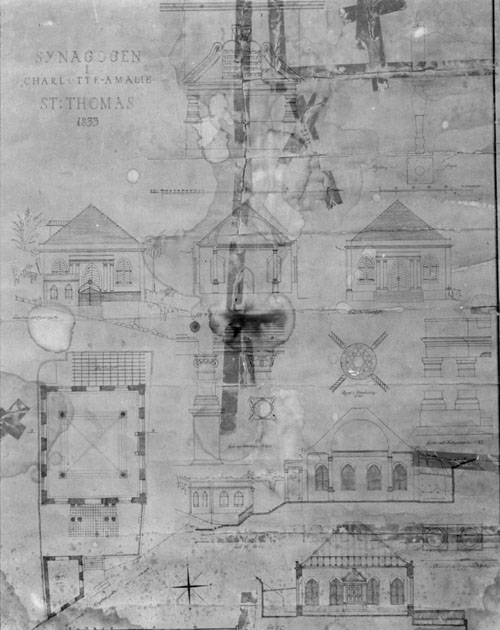
Built in 1833, by an unknown French architect, the Beracha Veshalom Vegemiluth Hasadim Synagogue (meaning, Blessing and Peace and Acts of Piety), also known as the St. Thomas Synagogue, stands in the site of the original synagogue, which was erected in 1792. The present day building is the fourth to have been constructed, as the first was destroyed in the fire of 1804, the second was re-built and replaced, and the third destroyed in the New Year’s Eve fire of 1831. It is the second oldest synagogue in North America and boasts the longest record of uninterrupted use by a Jewish congregation, starting with just nine families. Spanish and Portuguese Sephardic Jews, most of which are shown to have migrated from Brazil, had come to the Caribbean region for European and New World trade opportunities and to escape persecution and force to change faiths to Christianity, built the Synagogue. Many of those who ended up in St. Thomas came in 1781 from the small Dutch West Indies island of St. Eustatius after brutal attacks, robbery and persecution by the British. Denmark’s control of St. Thomas allowed for greater religious freedoms and acceptance for the Jews to find refuge and by 1814 the Danish monarchy had passed a royal decree granting full citizenship rights to Jews.
(Photo credit: Virgin Islands Historic Preservation Office)
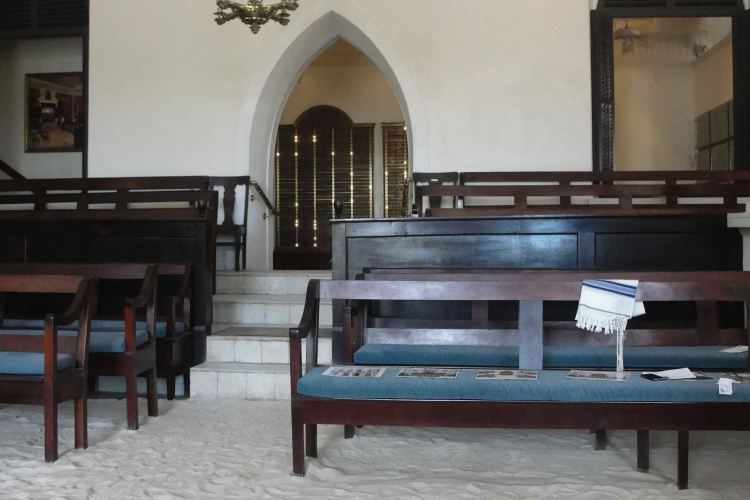
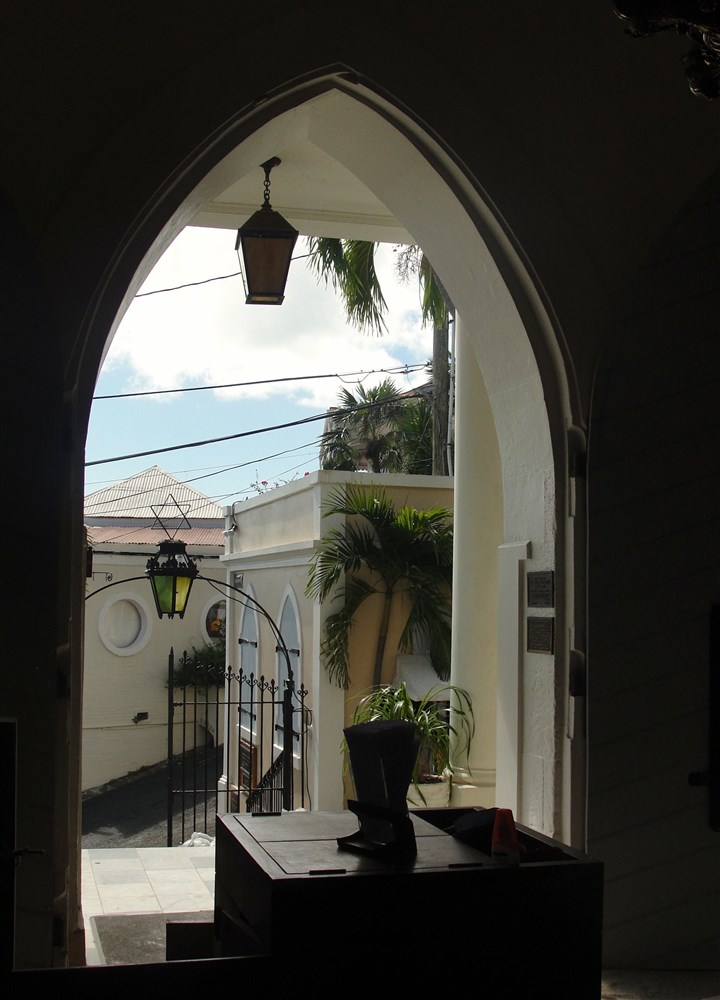
The Synagogue is a one-story, rectangular building constructed of rubble masonry and brick. The window and door openings are framed in red and yellow brick in Gothic styled arches. The wood roof is hipped and covered with corrugated metal. The interior layout follows Sephardic tradition and rituals, with an east to west orientation. This layout is further accentuated with a square area in the center defined by four decorated Ionic columns, which are representative of the four matriarchs of Jewish faith: Sarah, Rachel, Rebecca and Leah. The floor features ceramic tile and again following Sephardic traditions and rituals, the central area and congregation is covered with sand. “The floors of sand serve to remind the congregation of how its Jewish ancestors on the Iberian Peninsula covered the floors of their makeshift prayer houses so that their footsteps would be muffled and the suspicion of potential denouncers would not be aroused.”[1]
(Photo credit: Eberson, S. (2014, January 11). [Photograph found in Post-Gazette, Pittsburgh]. Retrieved February 29, 2016, from http://www.post-gazette.com/life/travel/2014/01/12/Synagogue-a-spiritual-respite-on-St-Thomas/stories/201401120040 (Originally photographed 2014, January 11))
The congregation does a great job of maintaining the Synagogue. The roof and gutters were repaired in the 1970s, the wooden shutters for the windows have been repaired or replaced where needed, and the once candle-lit European chandeliers have transitioned to electrical power. However, all of the wood interior elements remain original to 1833, such as the Ark, the Bimah and the pews all made from mahogany wood. The menorah is originally from Spain and predates back to the 11th century.
(Photo credit: Eberson, S. (2014, January 11). [Photograph found in Post-Gazette, Pittsburgh]. Retrieved February 29, 2016, from http://www.post-gazette.com/life/travel/2014/01/12/Synagogue-a-spiritual-respite-on-St-Thomas/stories/201401120040 (Originally photographed 2014, January 11))
In 1997 the Synagogue was added to both the National Register of Historic Places and the National Historic Landmarks. (see National Historic Landmarks nomination)
[1] Ben-Ur, Dr. Aviva. “Curacao:A Journey to Jewish Curacao.” Jewish Curacao. 23 Sept. 1990. Web. 29 Feb. 2016.
Discover more from Heritage Matters
Subscribe to get the latest posts sent to your email.
 Heritage Matters